
Training locations are centrally situated within St. John’s and are accessible by public transit. Final venue details, including the full address, are provided to registered participants prior to the workshop date.
All training is conducted in a classroom environment equipped with simulation models and instructional supplies to support hands-on practical learning.
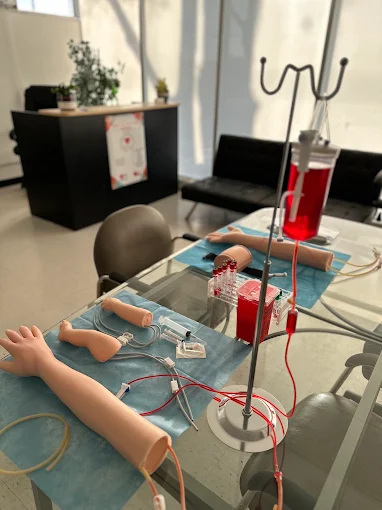
Training focuses on:
- Proper venipuncture techniques
- Site selection and preparation
- Equipment handling and specimen collection
- Infection control and patient safety
- Documentation and post-draw procedures
Instruction combines guided demonstration with supervised hands-on practice to ensure safe and effective technique.
Who This Workshop Is For
This St. John’s workshop is suitable for:
- Internationally educated healthcare professionals
- Medical assistants and clinic staff
- Nursing students
- Healthcare workers who perform blood draws in clinical settings
- Individuals preparing for further clinical certification
Participants should have a healthcare background or be currently working in a clinical environment.
Note: This course is not intended for those seeking full employment as a lab technician. It is designed to enhance existing healthcare practice.
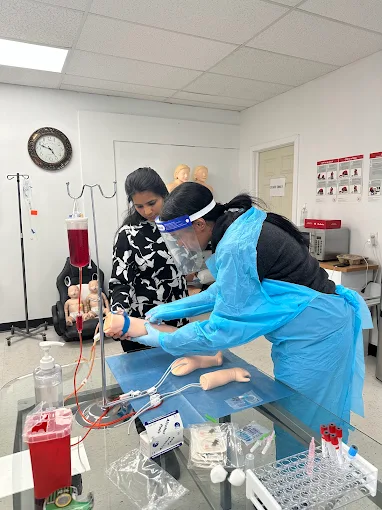
- Anatomy and physiology of the circulatory system
- Equipment selection and preparation
- Site assessment and vein selection
- Ethical and legal considerations
- Patient identification and consent
- Infection prevention and asepsis
- Managing patient anxiety
- Safety protocols and complication awareness
- Venipuncture using vacuum collection systems
- Butterfly and syringe techniques
- Proper specimen labeling and handling
- Post-procedure care and documentation
Why Train at Medical Training Center
Medical Training Center delivers structured, hands-on healthcare workshops across Canada.
- Experienced healthcare instructors
- Supervised simulation-based training
- Small group instruction
- Professional classroom learning environment
- Training locations in Oshawa, Winnipeg, and St. John’s
Our goal is to build practical confidence in a supportive learning environment.
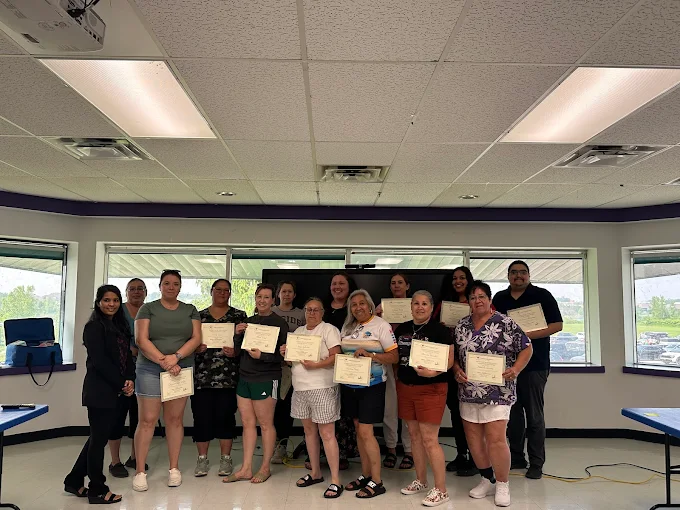
- Blood collection techniques
- Venipuncture using vacutainer and butterfly systems
- Specimen handling and transport
- Complication awareness
- Certificate issued upon completion
Other Training Programs in St. John's
Medical Training Center’s St. John's campus also offers:
- Phlebotomy Certificate Program — 3 weeks · CPTG-recognized certification
- Intramuscular Injection Workshop — 1 day · hands-on IM injection training
- Intravenous Administration Workshop — 1 day · hands-on IV insertion training