ACLS vs BLS comes down to level: Basic Life Support (BLS) is the foundation of resuscitation for healthcare providers, and Advanced Cardiovascular Life Support (ACLS) builds on it to manage cardiac arrest and other cardiovascular emergencies as a team. This post sets out what each Heart and Stroke Foundation of Canada course covers, what you need before you book, how long each card lasts, and which one your role is likely to ask for. You can compare every course in the family on our Heart and Stroke courses page.
QUICK ANSWER
BLS teaches high-quality CPR, AED use and team resuscitation, and the card is valid for one year. ACLS adds rhythm recognition, cardiac drugs, airway management and team leadership, and the card is valid for two years. Heart and Stroke requires a current BLS certificate to take ACLS, so most ACLS holders keep both cards.
Key takeaways
- BLS is the base: high-quality CPR, AED use and single- and multi-rescuer resuscitation.
- ACLS is the next level: cardiac arrest, dysrhythmias, stroke and acute coronary syndromes, managed as a team.
- BLS comes first: a current Heart and Stroke BLS certificate is a prerequisite for ACLS and for ACLS renewal.
- Two separate cards: BLS is valid for one year and ACLS for two, so you track two expiry dates.
- Your employer decides: the job posting or placement package names the card you need.
The difference between BLS and ACLS
The two courses sit on the same ladder. BLS teaches the skills every healthcare provider uses in the first minutes of a cardiac arrest. ACLS assumes you already have those skills and adds the advanced assessment, drug and leadership decisions that follow.
| BLS Provider | ACLS Provider | |
|---|---|---|
| Who it is for | Healthcare professionals and trained first responders | Healthcare providers who respond to cardiac arrest and cardiovascular emergencies |
| What it covers | High-quality CPR, AED use, single- and multi-rescuer resuscitation, team dynamics | Cardiopulmonary arrest, acute dysrhythmias, stroke, acute coronary syndromes, team leadership |
| Prerequisites | None | Current Heart and Stroke BLS certificate, plus the ACLS Precourse Self-Assessment (70% to pass) |
| Class time | About 3.5 hours, fully in person | 14 hours in class, or online learning plus 10 hours in class (blended) |
| Card valid for | 1 year | 2 years |
| Renewal | BLS Renewal course | ACLS Provider Renewal course |
Source: Heart and Stroke Foundation of Canada, BLS Provider course details and ACLS Provider course details (Canada, accessed 6 November 2026).
What BLS covers
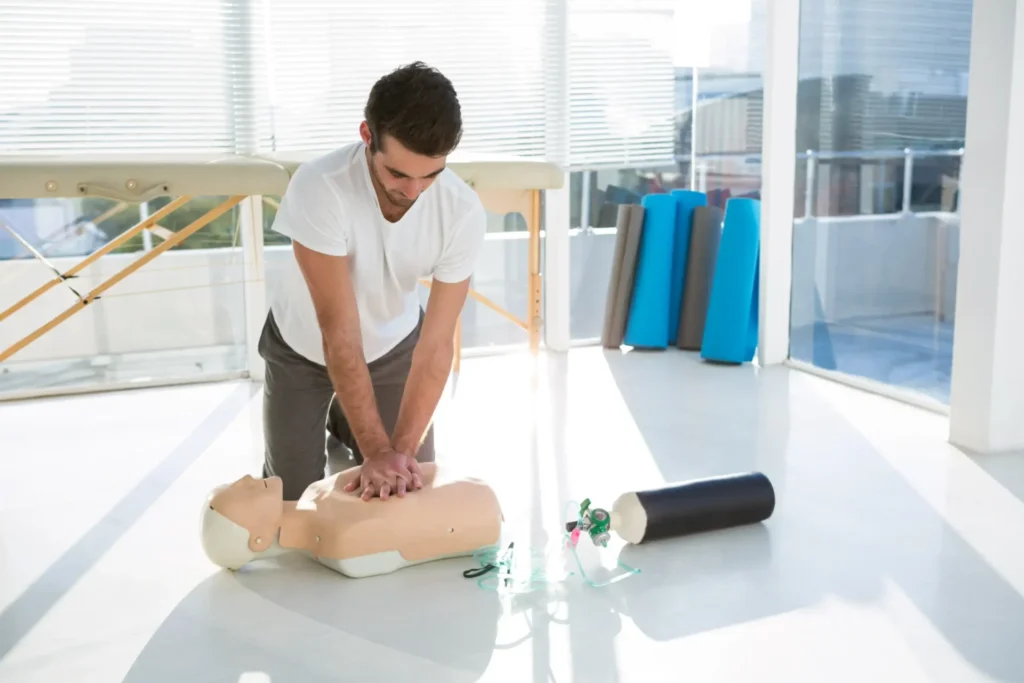
The Heart and Stroke BLS Provider course is a fully in-person class of about three and a half hours. You learn single- and multi-rescuer basic life support with a focus on high-quality CPR and team dynamics, in both prehospital and in-facility settings.
In our BLS classes you practise CPR for adults, children and infants, work through single- and multi-rescuer scenarios, and use an AED. Heart and Stroke describes BLS as a prerequisite for advanced resuscitation courses and for many healthcare training programs, and current certification is often a condition of employment.
We run BLS in Oshawa and at our BLS course in Belleville. If you already hold a valid card, the shorter BLS renewal course in Belleville or Oshawa is the faster route.
What ACLS covers
The Heart and Stroke ACLS Provider course trains you as a member and leader of a resuscitation team, through simulations based on real cardiac emergencies. Scenarios cover cardiopulmonary arrest, acute dysrhythmias, stroke and acute coronary syndromes, with high-quality CPR and team communication running through all of them.
Heart and Stroke expects you to arrive already able to do the following:
- Perform high-quality BLS.
- Recognize common cardiac rhythms on an ECG.
- Manage an airway and use airway adjuncts.
- Apply basic cardiac pharmacology.
- Work in a high-performance team on complex cases.
Source: Heart and Stroke Foundation of Canada, ACLS Provider course details (Canada, accessed 6 November 2026).

We offer ACLS in two formats that lead to the same Heart and Stroke ACLS Provider certificate: a traditional two-day classroom course, or a blended course where you finish the online module first and then attend one day in class. Belleville dates are on our ACLS course in Belleville page, and providers with a valid card can book the one-day ACLS renewal in Belleville.
Why you need both cards
ACLS does not replace BLS. Heart and Stroke lists a current BLS Provider certificate as a prerequisite for the ACLS Provider course, and a current BLS certificate is required again for ACLS Provider Renewal, alongside your current ACLS card.
The two cards are issued separately and expire on different schedules. Practising CPR during an ACLS scenario does not renew your BLS card, so an employer that asks for both will check two dates.
DID YOU KNOW?
A Heart and Stroke BLS card is valid for 1 year and an ACLS card for 2 years, so over one ACLS cycle you renew BLS twice.
Source: Heart and Stroke Foundation of Canada, BLS Provider and ACLS Provider Renewal course completion details (Canada, accessed 6 November 2026).
If you are new to both, book BLS first. It is the shorter course, it is required for ACLS, and it gives you a current card on the day you start ACLS.
Which one your role needs
The employer, school or placement sets the requirement, and the job posting or onboarding package usually names the exact card. As a guide to who books which course with us:
- BLS: nurses and nursing students, personal support workers, physicians and medical students, healthcare assistants, allied health professionals, and trained first responders.
- BLS and ACLS: nurses and physicians in emergency, critical care and cardiac units, paramedics, respiratory therapists, and other providers who take part in resuscitation.
If a posting lists both, plan for two current cards. If it says “Heart and Stroke”, check that your card comes from Heart and Stroke, because Heart and Stroke’s ACLS prerequisite asks for its own BLS certificate.
Where PALS fits
Pediatric Advanced Life Support (PALS) is the advanced course for infants and children, in the same way ACLS is for adults. Like ACLS, it is a separate card from BLS. Our post on PALS vs PEARS explains the two pediatric options.
Planning renewals
Put both expiry dates in your calendar. Heart and Stroke recommends renewing BLS skills every year, and the ACLS Provider Renewal course needs a current BLS card as well as a current ACLS card, so let BLS lapse and you will have to renew it before you can renew ACLS.
If your BLS card has expired, or it was issued by another organization, Heart and Stroke asks you to pass its BLS Renewal Prerequisite Challenge before you can take the renewal course. Otherwise, take the full BLS Provider course.
Source: Heart and Stroke Foundation of Canada, BLS Provider Renewal Prerequisite Challenge and ACLS Provider Renewal course details (Canada, accessed 6 November 2026).
Our step-by-step guide to BLS certification covers what to expect on test day, and our post on the benefits of ACLS certification looks at what the advanced card adds to your practice.
Frequently asked questions
Booking BLS and ACLS
Medical Training Center teaches Heart and Stroke Foundation BLS and ACLS courses in Oshawa and Belleville. Start with BLS if you do not hold a current card, then book ACLS in the format that suits you.
| Oshawa | Belleville | |
|---|---|---|
| BLS | BLS in Oshawa | BLS in Belleville |
| BLS renewal | BLS renewal in Oshawa | BLS renewal in Belleville |
| ACLS | ACLS in Oshawa | ACLS in Belleville |
| ACLS renewal | ACLS renewal in Oshawa | ACLS renewal in Belleville |
Last reviewed November 2026. Course requirements and fees change, so confirm current details with the Heart and Stroke Foundation.